
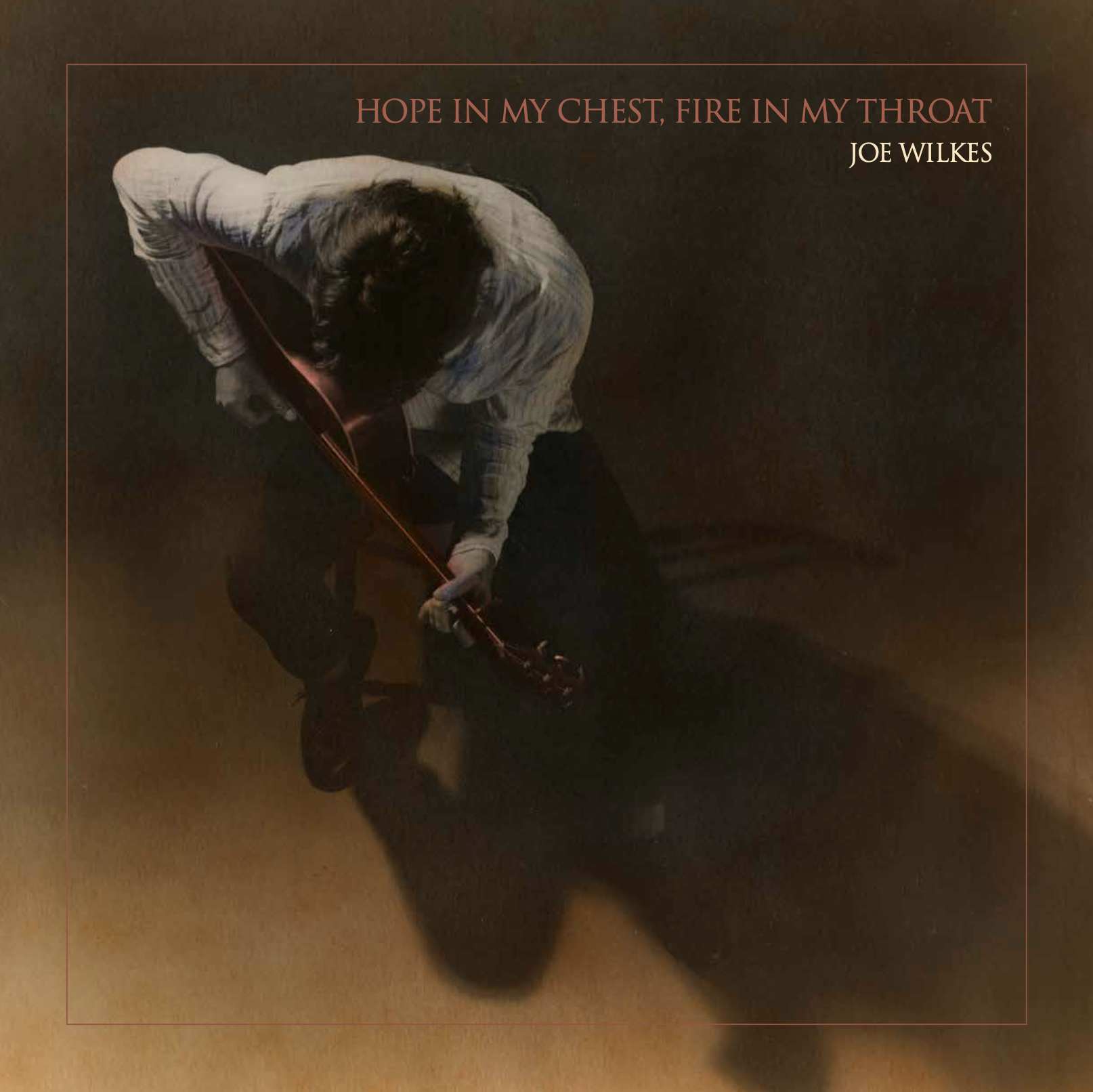
Album: Hope In My Chest, Fire In My Throat
Artist: Joe Wilkes
Label: Frontline Records FLR20
Release date: 27th Feb 2026
PRESS RELEASE
Wilkes offers a record that is both a tribute to the folk tradition and a challenge to its conventions. Recorded in the shadow of illness and upheaval, the album is less a curated folk anthology than a lived-in document of survival. A charged collection of traditional songs and original compositions that reflect the artist’s turbulent journey through, bereavement, disease, injury and addiction.
From the haunting “Lowlands of Holland” to the social commentary of “Hard Times of Old England,” the material is familiar, an introduction to the folk genre - but the treatment is anything but reverent. These are not museum pieces, they’re songs dragged through the brutality of modern times.
The recording was spectacularly interrupted many times, on one occasion Wilkes fell through the roof of an arms factory: Elbit Systems, the largest supplyer of weapons to Israel, breaking his back and leg. Wilkes faces charges and is lexpecting a trial next year. The recovery was long however, the songs stayed unfinished. While recovering from his injuries, he developed a rare and aggressive fibrotic condition in his hands, causing his fingers to contract painfully. It felt like the recording was cursed. Predictably the drinking increased and took the place of the music. Eventually having undergone surgery and having quit the drink, eleven songs came out.
Among the standout tracks is “Traditional Style,” a song that chronicles the life of Wilkes’ grandfather, Fred, a blacksmith’s striker, born in 1889. The song is a vivid portrait of working-class life, complete with real names and imagined confrontations, blending family history with mythic storytelling.
“We Don’t Talk About the Weather,” inspired by Ulrike Meinhof, laments the decline of protest music in the age of identity politics, juxtaposing the genocide in Gaza and the Exodus of biblical times
“Love Is Pleasin” is according to Wilkes an “English blues song,” predating American folk by a century and showcasing his admiration for the early British acoustic guitarists of the sixties who brought a lot of blues and grit to their folk.
“Hares on the Mountain,” recorded during lockdown, carries a strong feminine energy and is closely associated with Wilkes’ mother, who fell ill and died during the pandemic. The song’s mysterious lyrics reflect the strangeness of that time.
“The Old Triangle,” evokes themes of incarceration and resistance, while “A Brief History of Time” offers an idiosyncratic, sweeping take on world history, blending a more contemporary sound with black humour.
A duet with Charlotte Sometimes on “The House Carpenter” closes the record with eerie grace.
There’s a quiet fury in Wilkes’s critique of modern folk and the modern world. Despite his admiration for many contemporary performers, he sees a genre that’s lost its teeth, gentrified, sanitized, performed by the well-groomed for the well off. “My folk heroes looked like sailors,” he says, “Now they look like Kier Starmer.”
‘‘sounds a strikingly pertinent note… rings true both personally and politically’.
Uncut
We don’t talk about the weather / We don’t share the current views
Ulrike Meinhof is my sister / And she don’t sing the blues
Who is telling the truth / The Judge has got his spies
Breakfast talk-show, triviana / Puking up the lies
You got a look on your face / You got a ribbon in your hair
Your father served in the old regime / Now he leans back on his chair
We don’t talk about the weather / We don’t read the reviews
But we have a plan and a song in our heart / And we know we can never lose
There’s a dawn raid / Coming from the west
There’s a chill wind blowing / and a mantra in our breast
From the river to the sea / Down to the coastal plain
Don’t you cry, we will never let you die / In the end-game
Look at the pretty soldier / Stamp on the machine
From the Exodus to the Nakba / In the age-old routine